A small business guide to CCTV
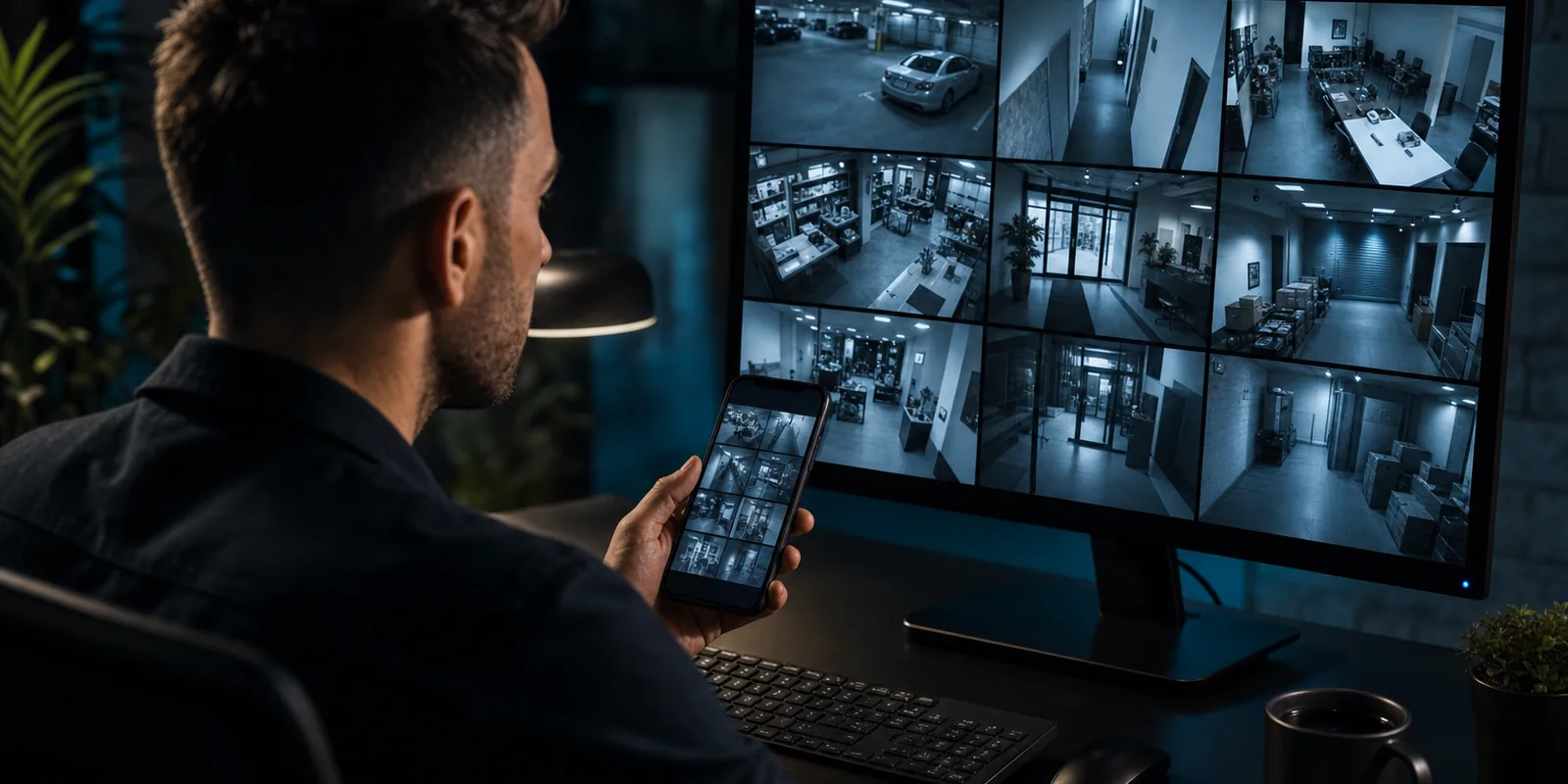
A good CCTV system does far more than capture footage after the event. It deters opportunists, protects your staff, settles disputes and gives you genuine peace of mind whether you're on site or miles away. But buying the wrong system — or installing one without thinking about the rules — can waste money and create headaches. This guide walks through what UK small businesses need to know before they invest.
Start with what you're trying to protect
Before looking at cameras, get clear on your goals. Are you deterring break-ins out of hours? Keeping an eye on a stockroom or till? Protecting staff who work alone? Monitoring a yard or car park? Each of these points to different camera types, positions and resolutions. A short site survey — walking the premises and identifying the vulnerable points — is the single best way to avoid blind spots and over-spending.
Choosing the right cameras
Modern business systems are almost always IP (network) based, which gives sharper images and far more flexibility than older analogue kit. Within that, a few choices matter:
- Resolution — higher resolution means you can actually identify faces and number plates, not just see "a person was here".
- Field of view — wide-angle cameras cover open areas; narrower lenses suit entrances and tills.
- Low-light performance — infrared or low-light cameras are essential if you need overnight cover.
- Indoor vs outdoor — outdoor units need weatherproofing and vandal resistance.
Quality over quantity
Four well-placed cameras almost always beat ten poorly positioned ones. Covering the right spots clearly is more valuable than blanketing the building with footage nobody can use.
Viewing footage remotely
One of the biggest advantages of a modern IP or cloud system is remote access. You can view live and recorded footage from a smartphone, tablet or laptop wherever you are in the world. For owners who can't always be on site, that's transformative — you can check in on the business from home, on holiday or between meetings, and respond quickly if an alert comes through.
How long to keep footage
Recordings are stored either on a local recorder or in the cloud, and how long you keep them is up to you. Most businesses opt for around 30 days of retention, which balances usefulness against storage cost — but this can be configured to suit your needs. The key principle is to keep footage only as long as you genuinely need it, which also keeps you on the right side of data protection rules.
Planning permission and the rules
For most standard installations on commercial premises, you won't need planning permission. However, if your cameras capture public spaces or neighbouring properties, there are guidelines you need to follow. A reputable installer will flag this during the site survey and position cameras to minimise unnecessary coverage of areas outside your control.
Staying compliant with UK GDPR
Because CCTV records images of identifiable people, it falls under UK GDPR. In practice that means displaying clear signage telling people they're being recorded, having a justified reason for the cameras, restricting who can view footage, keeping it only as long as needed, and being able to respond if someone asks for footage of themselves. None of this is onerous — it's mostly a matter of doing things properly from the start.
Insurance and ongoing support
Many insurers will reduce premiums for businesses with CCTV installed, so it's worth checking with your provider; a good installer can supply documentation of your system if needed. And like any technology, cameras occasionally develop faults — which is why ongoing support matters. With remote diagnostics and engineer visits when required, you're never left with a system that's quietly stopped recording.
Get it set up properly
CCTV is one of those investments where the difference between "done cheaply" and "done well" shows up exactly when you need the footage most. Our business CCTV service covers the lot — site survey, the right cameras in the right places, remote viewing, compliant footage storage and proper ongoing support. It also pairs neatly with door access control, so a door event can be tied straight to a camera recording. We look after businesses right across the North West from our base in Bury.
Thinking about CCTV for your premises?
Book a free site survey and we'll recommend exactly the right setup for your business — clear footage, remote access and full UK GDPR compliance, with no jargon.